




I see many patients with chronic acne problems caused by “incorrectly squeezing pimples,” especially those who do it themselves at home without knowing the type of acne or the appropriate time to extract it. In this article, I will explain whether each type of acne can be squeezed and how to avoid swelling, wounds, and marks in easy-to-understand language grounded in genuine dermatological principles. This content draws on real acne-treatment experience at The Vanish Clinic, visual and medical-instrument assessments of acne types, and safe practices that meet medical standards.
What Is Pimple Squeezing, and Why Do Most People Get It Wrong?
Squeezing a pimple involves applying pressure to remove a blockage from a pore. The problem is that not every type of acne should be squeezed. Squeezing the wrong type of acne, doing it at the wrong time, or using the wrong tools can push bacteria deeper into the skin, causing inflammation and permanent scarring.
Common Reasons Pimple Squeezing Goes Wrong
- Not being able to identify the type of acne
- Using unclean fingers or tools
- Squeezing before the pimple is ready
- Repeatedly squeezing the same spot
How Acne Types Differ and Whether They Should Be Squeezed
Before considering squeezing a pimple, you need to identify its type because the outcomes can differ significantly.
Open Comedones (Blackheads)
With this type of acne, the pore is open, and the head appears black due to oxidation of the sebum.
- Can it be squeezed? Yes, but only when the head is clearly visible.
- Risk: Low if done correctly.
Closed Comedones
The comedone remains beneath the skin and is not clearly visible.
- Can it be squeezed? It should not be.
- Risk: Swelling, redness, and progression to inflammatory acne.
Inflammatory Acne (red and painful)
There is infection and inflammation within the skin.
- Can it be squeezed? Do not squeeze it.
- Risk: Atrophic scars and permanent dark marks.
Pustules
These contain white or yellow pus.
- Can they be squeezed? Only by a doctor or specialist.
- Risk: The pus may rupture beneath the skin and cause fibrosis.
How Comedone Extraction Differs from Squeezing Pimples
Many people think extracting comedones and squeezing pimples are the same, but they actually differ in the “force and direction” used.
Key Differences
- Comedone extraction: Pressure is applied downward and then upward along the pore.
- Pimple squeezing: Inward pressure is applied from both sides, which may tear the pore wall.
The Doctor’s Summary
- For comedonal acne, extraction is recommended.
- For inflammatory acne, extraction is not recommended.
Squeezing a Large Blackhead Is Riskier Than You Think
Large blackheads often have deep, hardened plugs of sebum. I find that many patients cannot extract them and keep squeezing until inflammation develops.
Common Risks
- Squeezing without extracting it → bruised skin
- The acne turns into a hard lump, causing adeep dark acne mark
Safer Alternatives
- Apply a warm compress
- Use medication that helps dissolve comedonal plugs
- Have a specialist perform the extraction
What Causes Swelling After Squeezing a Pimple?
Swelling after squeezing a pimple does not mean that “the acne is going away.” It is a sign of inflammation.
Main Causes
- Using excessive pressure
- The pimple is not ready
- Germs entering the skin
What to Do Immediately
- Stop squeezing
- Apply a cold compress
- Apply an antiseptic/anti-inflammatory medication
- Avoid applying makeup over the area
Why Does Squeezing Cause Wounds in Some People but Not Others?
Acne wounds depend on the “depth of the inflammation” and “care after squeezing.”
Risk Factors for Scarring
- Squeezing inflammatory acne
- Picking at scabs
- Thin, sensitive skin
- Not using sun protection
Table: Outcomes After Squeezing Pimples
| Behavior | Short-Term Outcome | Long-Term Outcome |
| Squeezing correctly | Mild redness | Heals without marks |
| Squeezing forcefully | Swelling | Dark marks |
| Squeezing inflammatory acne | Pain | Atrophic acne scars |
If You Must Squeeze a Pimple, How Can You Do It Safely?
I do not encourage squeezing pimples yourself, but if it is truly necessary, follow these principles.
Safety Checklist
- Clean your hands and skin
- Disinfect the tools
- Only squeeze open comedones
- Squeeze once; if nothing comes out, stop
- Apply an antiseptic immediately
When Should a Doctor or Clinic Treat the Acne Instead?
In some cases, persisting in squeezing acne yourself can be the start of a long-term problem.
See a Specialist When
- Inflammatory acne repeatedly appears in the same spot
- The acne forms a hard lump
- You have a history of scarring easily
- Acne appears in a higher-risk area (the nose or chin)
FAQ: Questions Doctors Frequently Receive About Squeezing Pimples
Q: Can I squeeze pimples every day?
A: No. Frequently disturbing the skin can cause acne flare-ups and inflammation.
Q: Can I pierce a pimple with a needle myself?
A: It is not recommended because there is a high risk of infection.
Q: What medication should I apply after squeezing a pimple?
A: A mild antiseptic and a non-comedogenic anti-inflammatory medication.
Q: The acne is gone, but a mark remains. What should I do?
A: Treat the mark early to reduce the chance of it becoming permanent.
The Doctor’s Summary
“Acne” is not as frightening as managing it incorrectly. Understanding each type of acne is the key to helping the skin truly heal without leaving marks or requiring repeated treatment expenses in the future.
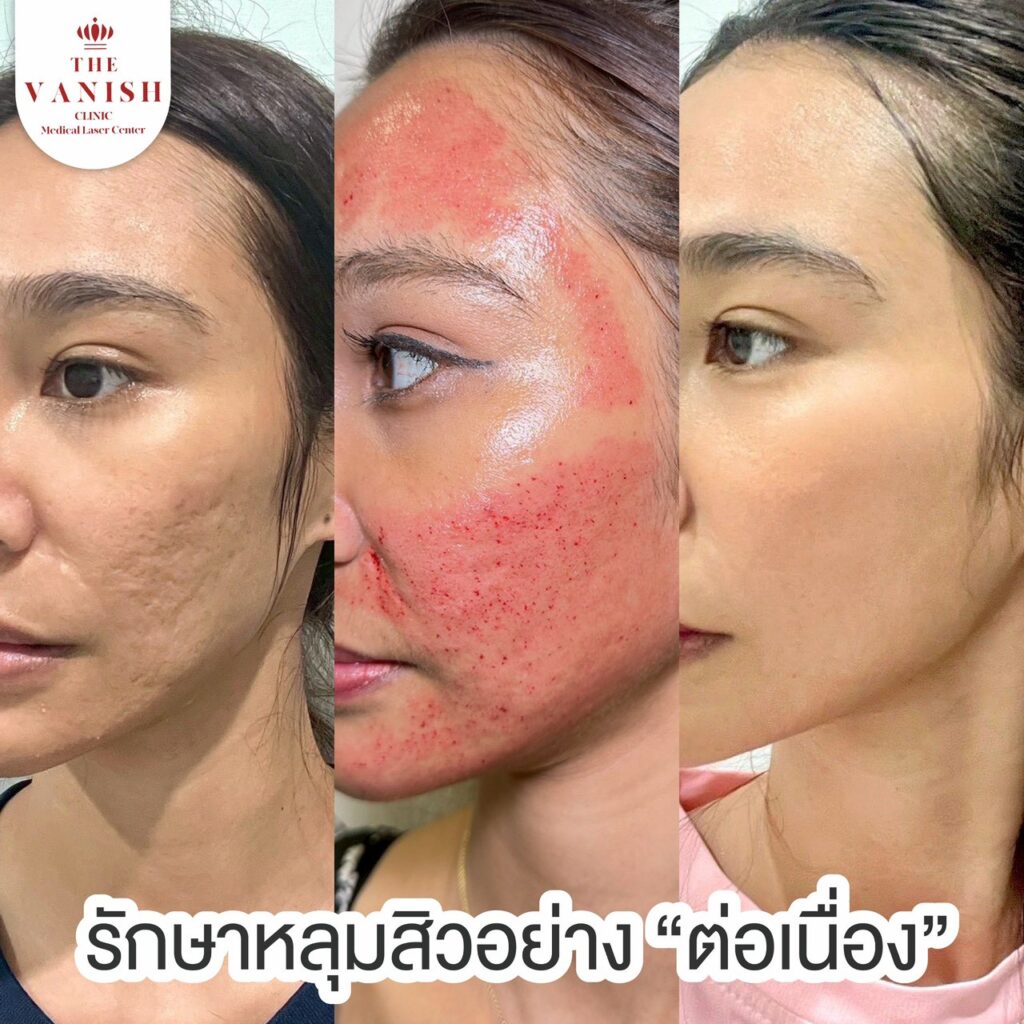
If you are looking for an effective and safe way to treat skin concerns, PicoWay Laser at The Vanish Clinic is an option designed to meet your needs. With a team of specialist doctors and modern equipment, we are committed to delivering the best possible results so you can feel confident with clear, beautiful skin. Contact us for a consultation and skin assessment.

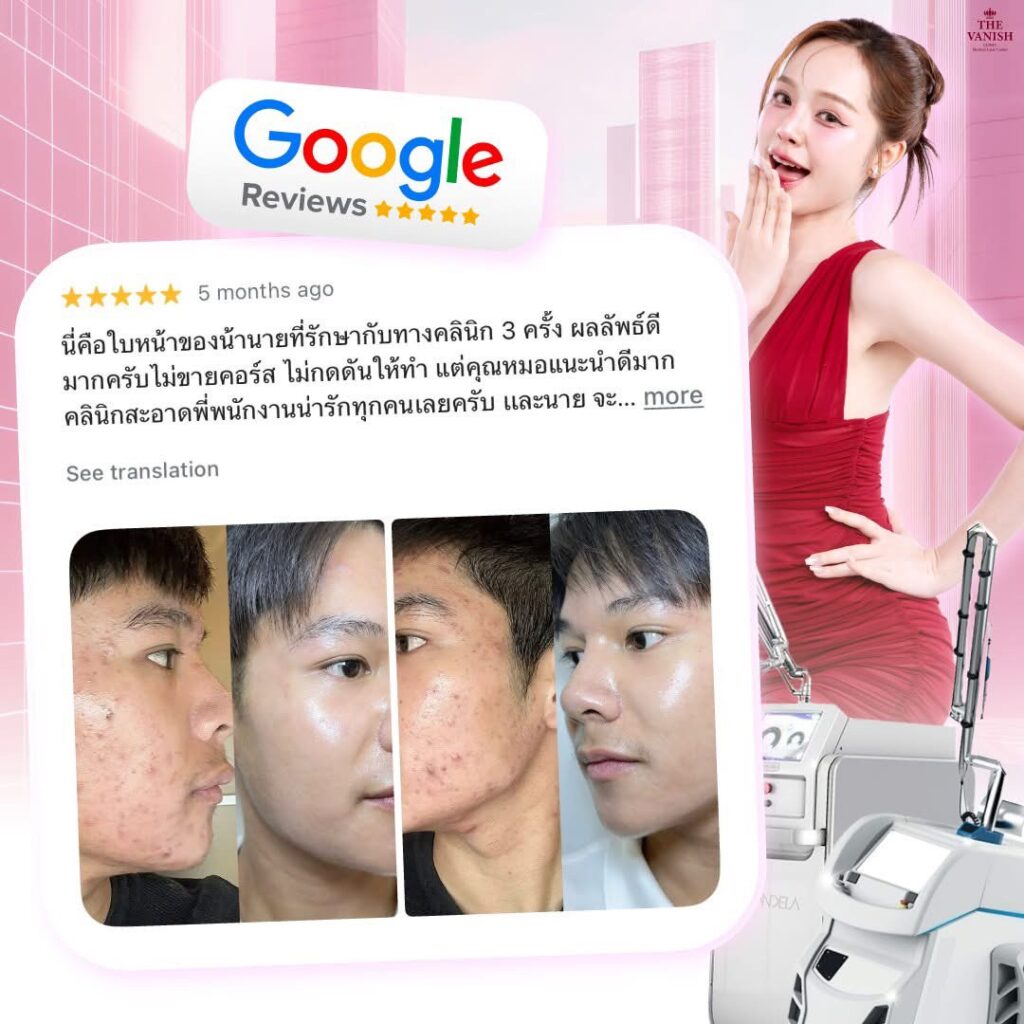
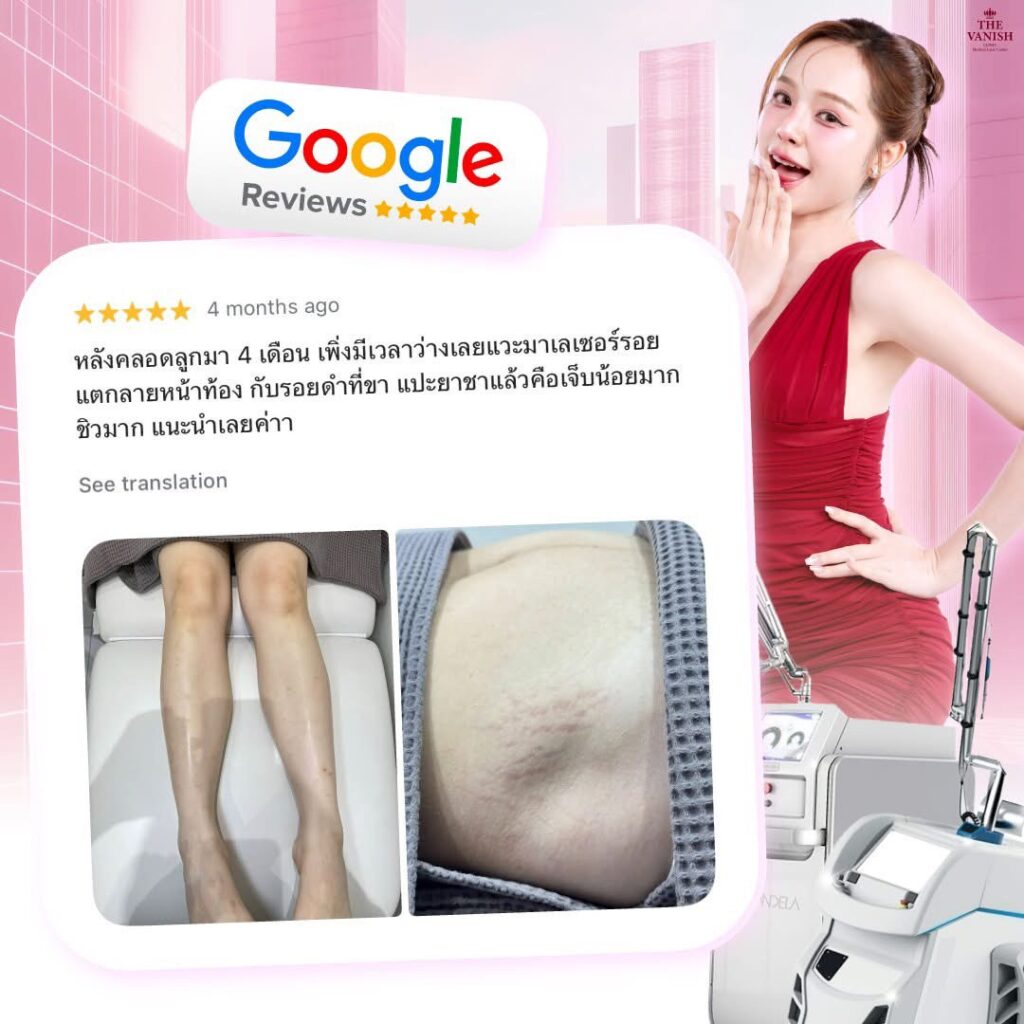
Genuine Google Reviews from The Vanish Clinic Patients