





“It’s only a minor wound—it will heal on its own.” This assumption could permanently change the appearance of your face. Facial skin is delicate and has greater blood flow than other parts of the body. Without proper treatment, even a small abrasion could develop into post-inflammatory hyperpigmentation (PIH) or a raised scar (Keloid), which can be many times more difficult to treat.
If you are wondering how to help a facial wound heal quickly without leaving a mark, this article explores the wound-healing process in depth, along with treatment technologies whose results are guaranteed by specialist physicians.
Types of Facial Wounds (Wound Type)
To understand how to treat a facial wound, the first thing you need to know is not how to correct it, but how to identify the wound type accurately. Facial skin is more complex and delicate than skin elsewhere on the body. Treating an inflamed acne wound is entirely different from treating an abrasion. Using the wrong approach may prevent healing and instead stimulate fibrous tissue formation, potentially causing a permanent scar.
Abrasions
These are superficial wounds caused by friction that damage only the epidermis.
- What to look for: Clear fluid or slight bleeding, with redness and a stinging sensation in the affected area. This type of wound generally heals fastest when adequate moisture is maintained.
Inflamed Acne Wounds (Acne Wounds)
These result from bacterial infection and severe inflammation beneath the skin that damages the tissue.
- What to look for: Pain, swelling, redness, and often pus. Because the damage can extend deep into the dermis, this type of wound carries a very high risk of post-inflammatory hyperpigmentation (PIH) and atrophic acne scars.
Post-Procedure Wounds
Wounds intentionally created during medical procedures, such as laser mole removal, acne extraction, or minor surgery.
- What to look for: These wounds tend to have smoother, cleaner edges than accidental wounds. They require a highly sterile standard of care to prevent secondary inflammation.
Burns & Scalds
These may be caused by heat, intense sunlight (Sunburn), or certain chemicals.
- What to look for: The skin may become intensely red or form fluid-filled blisters. As the skin loses its natural protective barrier, it rapidly loses moisture and becomes highly susceptible to irritation.
The Wound-Healing Process (Wound Healing Phase)
Skin repair is a complex biological process involving the coordinated activity of many cell types. Under established dermatology research frameworks, it can be divided into four main phases.
- Phase 1: Hemostasis This begins immediately, within minutes. Platelets aggregate to form a Fibrin Clot, closing the wound and releasing Cytokines that recruit inflammatory cells.
- Phase 2: Inflammation During the first 24–72 hours, white blood cells called Neutrophils and Macrophages remove bacteria and dead tissue (Debridement). This phase provides an essential foundation for wound healing. If inflammation persists too long, it can lead to chronic scarring.
- Phase 3: Proliferation From day 3 to three weeks, Fibroblastsproduce new collagen, while new blood vessels form (Angiogenesis) to deliver nutrients to the wound. During this phase, “pink tissue” (Granulation Tissue) begins to appear.
- Phase 4: Remodeling From week 3 to one or two years, this is the longest phase. Collagen reorganizes so that the skin’s Tensile strength becomes as close as possible to that of the original skin.
Factors that delay wound healing: Wound dryness, smoking, underlying conditions such as diabetes, and picking or scratching that disrupts the Proliferation phase.
Scientific Reference:The mechanisms described here are based on the study “Stages of Wound Healing and Management of Adherent Formulations” by H.N. Wilkinson and M.J. Hardman, published in an internationally recognized dermatology journal.
How to Treat a Facial Wound Correctly at Each Stage
To help a wound heal without leaving a mark, follow these steps:
- Clean the wound and reduce inflammation: Rinse it with Normal Saline (sterile saline solution). Avoid pouring alcohol directly onto the wound, as this damages newly forming tissue.
- Use an antimicrobial or wound-healing topical treatment: Use Mupirocin when there is a risk of infection, or a Growth Factor product to stimulate skin-cell proliferation.
- Cover the wound for Moist Wound Healing: A Hydrocolloid dressing helps maintain an appropriate moisture level. Research confirms that this allows skin cells to migrate and close the wound up to 50% faster than leaving it to dry and form a scab.
- Apply creams for post-wound redness and dark marks: Once the wound has completely closed, begin using products containing Vitamin C, Arbutin, or Tranexamic Acid to inhibit pigment production.
How Can Facial Scars Be Treated?
Effective scar treatment requires a combination of home care and medical procedures. The type of scar—atrophic, red, or raised—must be assessed to select technology capable of remodeling collagen deep within the dermis.
1. Topical Scar Treatments
Silicone Gel helps retain moisture and regulate abnormal collagen production. Creams containing Cepalin or shallot extract can help inhibit inflammation and reduce the likelihood of raised scars during the early stages.
2. Pico Laser / Discovery Pico Programs for Facial Scars
Standard wound-healing creams may not be sufficient for wounds extending into the Dermis. Treatment with medical devices at The Vanish Clinic delivers energy into deeper layers that topical creams cannot reach.
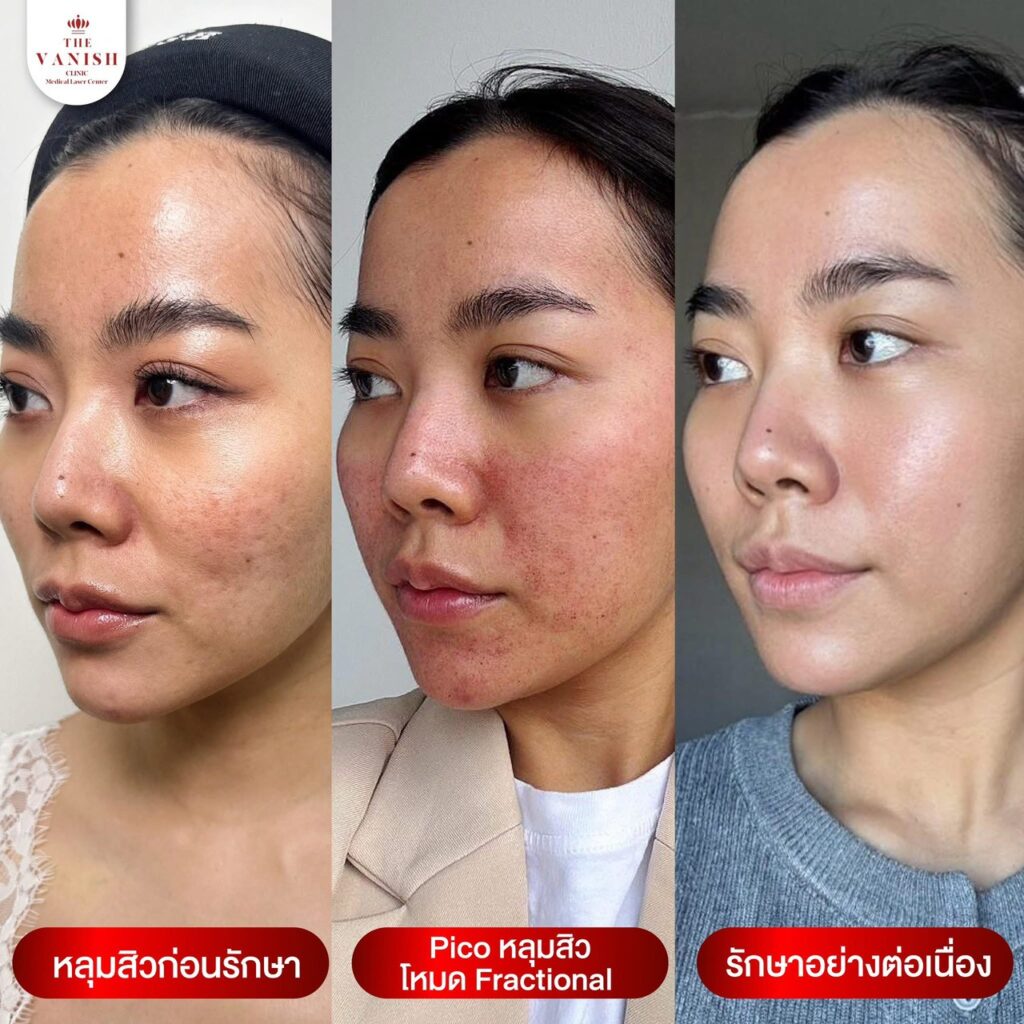
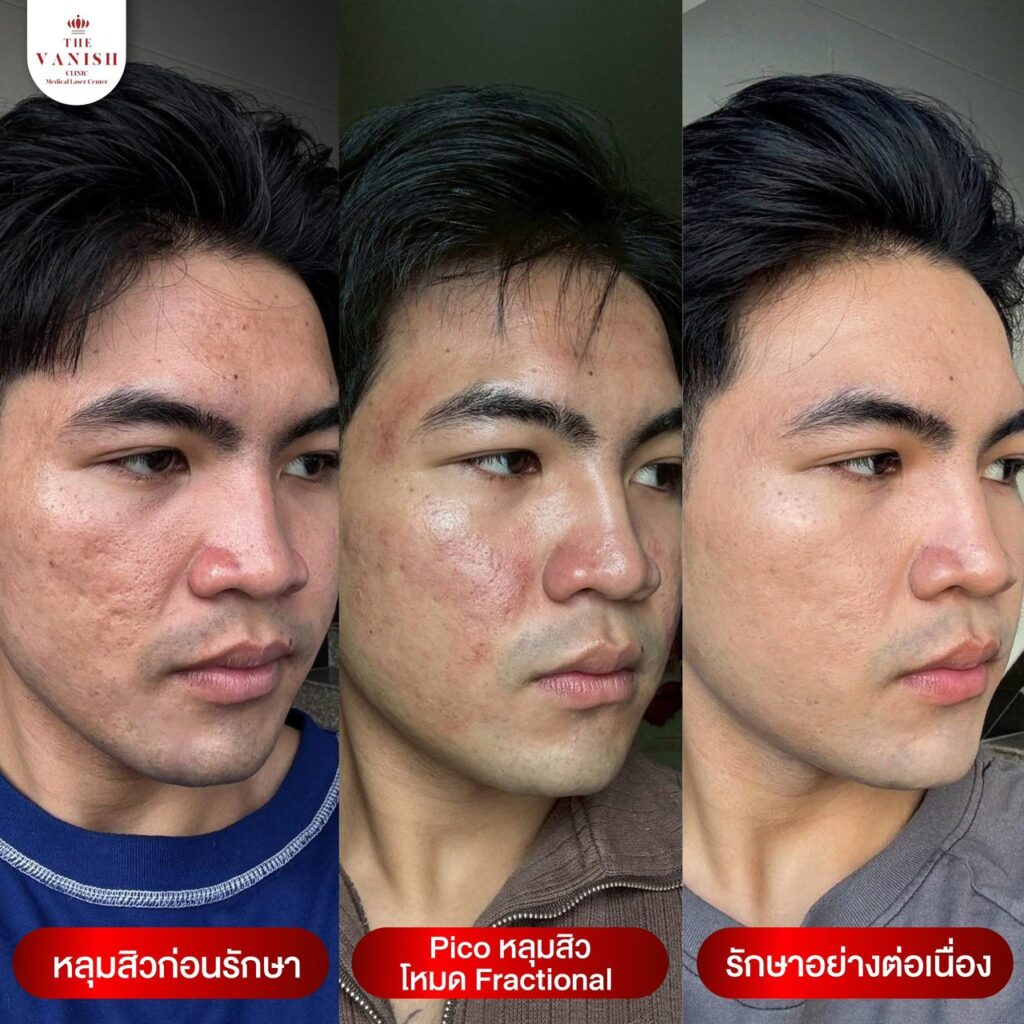
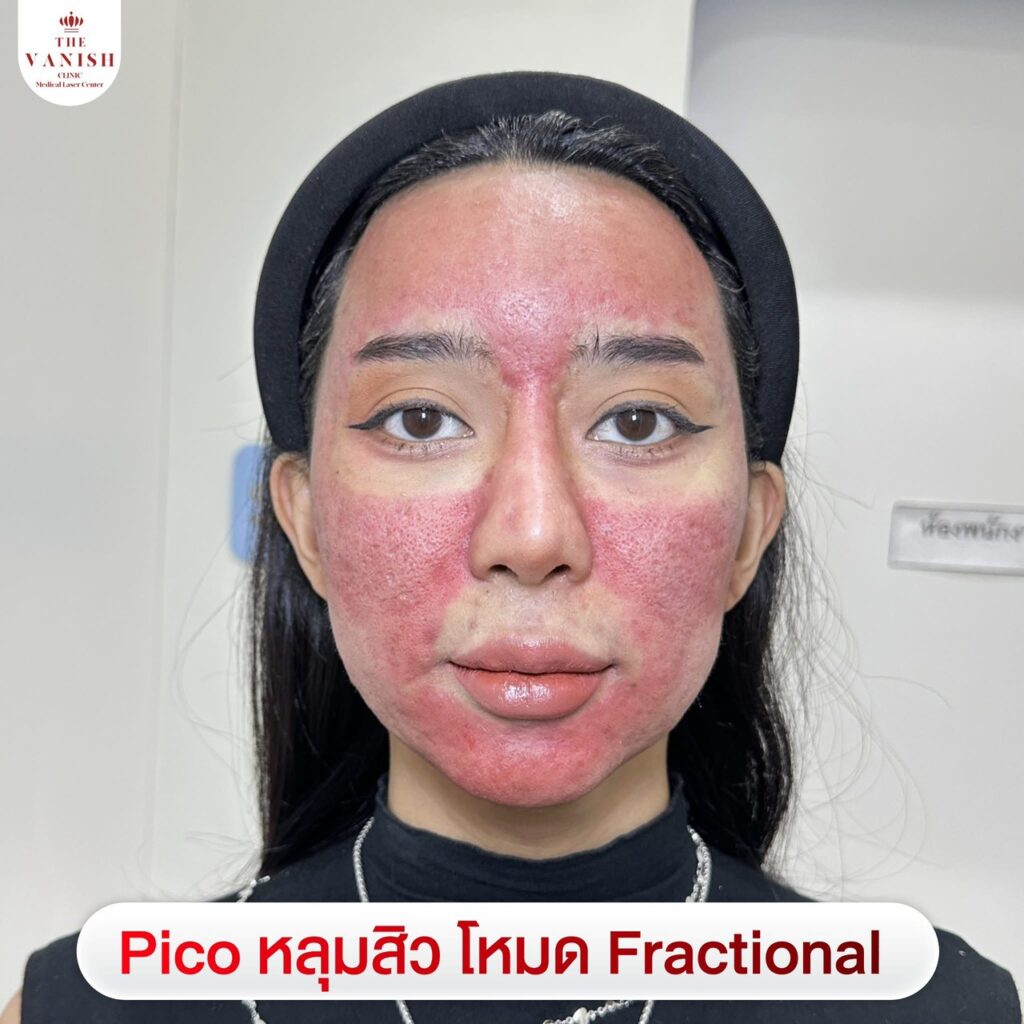
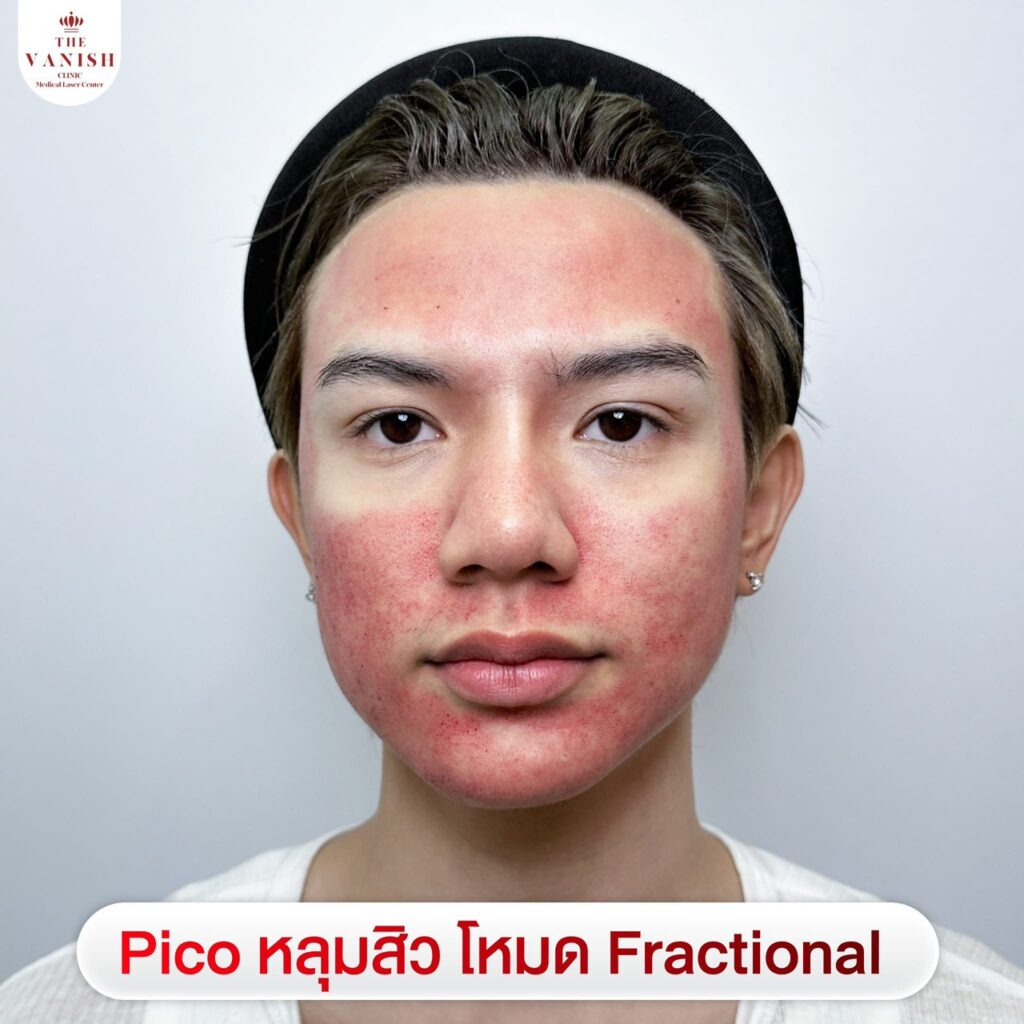
Pico Laser technology delivers energy at Picosecond speed to create tiny cavities (LIOB) beneath the skin. This helps break up fibrous tissue and stimulate new collagen production without damaging the skin’s surface, making it suitable for smoothing acne scars and other scars.
PICO Laser and Discovery PICO Treatment Review for Acne-Related Dark and Red Marks
3. Scar Revision Surgery
For a large or visibly distorted scar, a physician may consider Scar Revision surgery to change the scar’s direction or close the wound again using meticulous suturing techniques. The goal is to make the scar smaller and help it blend smoothly with the skin’s natural creases.
4. Filler Injection Program
For a deep, indented scar (Atrophic Scar), injecting a Hyaluronic Acid filler into the depression helps lift the skin immediately so it lies level with the surrounding area. It also helps stimulate natural new tissue formation over the longer term.
5. Steroid Injections
For raised scars or Keloids, a physician injects Triamcinolone into the scar tissue to reduce inflammation and inhibit Fibroblast growth. This allows the thick, raised scar to gradually flatten and soften within a few weeks.
When Should You See a Doctor? Warning Signs That Should Not Be Treated at Home
Although the body has its own repair mechanisms, there is little room for error when treating facial skin. If you notice any of the following medical warning signs, see a specialist immediately to prevent permanent damage:
- A wide wound extending deeper than the dermis: If the wound edges do not meet or yellow fat or muscle is visible, the wound must be sutured within 6–12 hours to reduce the risk of infection and scar contracture.
- Signs of a severe infection: Throbbing pain, redness and swelling that continue to spread, discharge of pus, or fever. These signs indicate that bacteria may be invading the bloodstream or deeper layers of the skin.
- A wound caused by contamination or an animal bite: Examples include wounds involving rust or soil and dog or cat bites. These carry a risk of tetanus and specific infections that cannot be resolved with standard topical medication.
- A wound in an area at risk of disfigurement: Areas around the eyes, lips, or nose move frequently and contain a dense network of nerves. Allowing such wounds to heal on their own may cause contracture that alters facial contours.
- People Prone to Keloids (Keloid Prone): If you have a history of developing raised scars easily, allowing a wound to heal on its own increases the risk of a raised mass forming by 80–90%. Having a physician manage the wound from the Proliferation phase can help inhibit excessive collagen production.
Frequently Asked Questions (FAQ)
What cream should I use on a facial wound?
During the initial stage, use an antimicrobial ointment or Petrolatum to retain moisture. Once the wound has closed, switch to a scar cream containing Cepalin or Allantoin.
When should I start using a silicone sheet?
You can begin as soon as the wound has completely closed and is no longer oozing. The sheet should be worn continuously for at least 12–24 hours per day.
How long does wound redness last?
Redness normally lasts one to three months. If it persists beyond that period, it may develop into permanent redness requiring treatment with a Vascular Laser.
Article Summary
The answer to the question “How should a facial wound be treated?” involves more than applying medication. It requires an understanding of the stages of wound healing and appropriate moisture management. Most importantly, consult a specialist physician to assess the wound’s depth and select the appropriate technology, helping your facial skin become smooth again as though the wound had never occurred.
Would you like advice about facial scars or wound care? Let the medical team at The Vanish Clinic care for you today for precise and safe results.
Genuine Google Reviews from The Vanish Clinic Patients